New study from the RVC shows how livestock welfare can be improved through one simple change
New research from the Royal Veterinary College (RVC) has revealed that changing when animals are inspected during transport could significantly improve their welfare. The findings provide a practical framework for improving how animal wellbeing is assessed at abattoirs and could help guide future inspection practices.
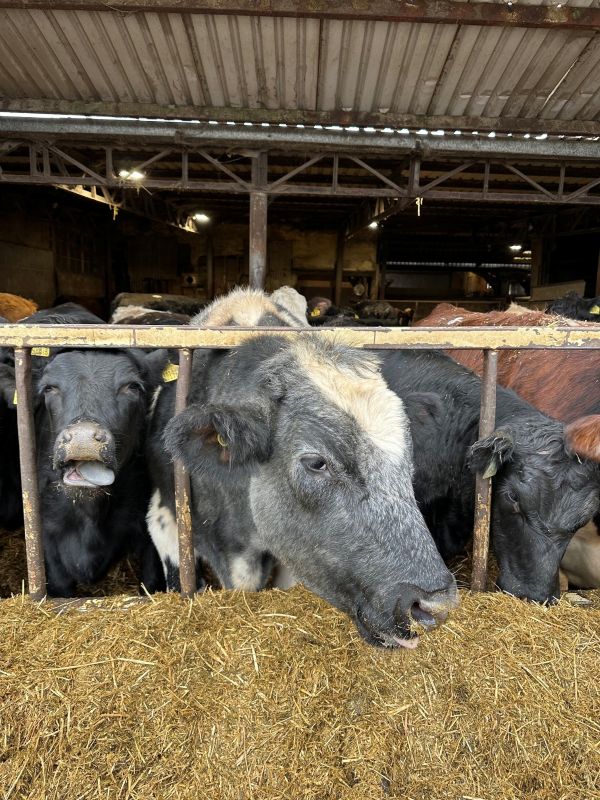
Each year, millions of animals in the UK are transported to abattoirs. Welfare issues such as injury, fatigue and distress can occur during transport but are not always identified under current inspection systems. This study shows that a simple change - observing animals as they are unloaded from vehicles, rather than once they are settled in holding pens - could dramatically improve how these are detected. Earlier identification of these potential welfare concerns could also help reduce unnecessary suffering and improve conditions for animals up to the end of life, while also supporting food safety standards.
Published in Veterinary Record, the study was led by a team of researchers at the RVC, including final-year veterinary student, Sayaka Mochizuki; and Senior Lecturer in Veterinary Public Health, Kurt Arden; assisted by Declan Arden from the University of Plymouth. Together, the researchers set out to understand how effectively welfare issues are identified during routine ante-mortem inspections, comparing observations made during unloading with those carried out later in lairage holding pens.
Over the course of the study, thousands of animals, including cattle, sheep and pigs, were observed at a UK abattoir. The results showed that observing animals during unloading significantly increased the detection of welfare issues such as lameness, slipping and falling. Across all species, welfare problems were far more likely to be identified at this stage, with detection rates increasing more than tenfold in some cases. This is largely because issues become much easier to spot while the animals are in motion, rather than while they are stationary.

As a result, the research team propose a simple solution – a new, practical inspection approach called Animal-Based Measurement (ABMs) which implements simple visual checks during unloading to identify potential health issues. Incorporating this strategy could enable veterinarians to identify problems earlier, provide more effective feedback to farmers and transporters and take action to reduce suffering. It also offers a straightforward, evidence-based way to improve food safety standards. Importantly, this method can be implemented in real-world settings without disrupting abattoir operations.
The research highlights a clear opportunity for simple but effective change. By updating inspection practices to require routine observation during unloading, regulation can take a meaningful step forward in protecting animal welfare.
Sayaka Mochizuki, final year veterinary student at RVC and lead author of the study, said:
“Animal transport ultimately serves the human economic and commodity interests. While the experience is relatively brief, it defines the final moments of the lives of production animals and the nature of their death. We have a moral obligation to undertake this process as ethically as possible, and our proposal provides a simple but effective way toward a more improved norm.”
Kurt Arden, Senior Lecturer in Veterinary Public Health at the RVC and co-author of the study, said:
“Improving animal welfare does not always require complex solutions, sometimes all it requires is a new perspective. This study demonstrates how simple, practical changes can reduce suffering, and underscores the important role veterinary students play in producing research that delivers real-world impact.
Notes to Editors
Reference
Mochizuki S, Arden D, Arden K. Abattoir antemortem inspection protocol: Observation of unloading improves detection of transport welfare compromises in livestock. Vet Rec. 2026;e1–e12. https://doi.org/10.1002/vetr.70555
The full paper can be accessed at: https://bvajournals.onlinelibrary.wiley.com/doi/10.1002/vetr.70555
For media enquiries, please contact:
- rvc@plmr.co.uk
- Press Line: 0800 368 9520
About the RVC
- The Royal Veterinary College (RVC) is the UK's largest and longest established independent veterinary school and is a Member Institution of the University of London.
- It is one of the few veterinary schools in the world that hold accreditations from the RCVS in the UK (with associated recognition from the AVBC for Australasia, the VCI for Ireland and the SAVC for South Africa), the EAEVE in the EU, and AVMA in the USA and Canada.
- The RVC is ranked as the top veterinary school in the world in the QS World University Rankings by subject, 2026.
- The RVC offers undergraduate and postgraduate programmes in veterinary medicine, veterinary nursing and biological sciences.
- The RVC is a research-led institution, with 88% of its research rated as internationally excellent or world class in the Research Excellence Framework 2021.
- The RVC provides animal owners and the veterinary profession with access to expert veterinary care and advice through its teaching hospitals and first opinion practices in London and Hertfordshire.