

Defining the contribution of microvasculature cells to tendon health and ageing
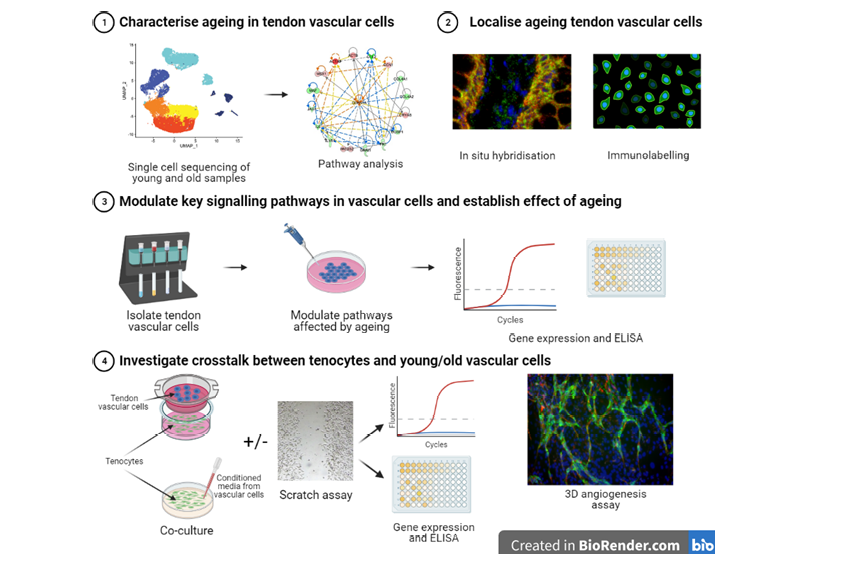
Cells associated with the tendon microvasculature, or blood supply, are preferentially affected by ageing. In this project, we are investigating how tendon vascular cell function is affected by ageing and if we can reverse this by cell signalling.
Challenge
Age-related tendon injuries are common in horses, with poor healing capacity and lack of effective treatments leading to persistent lameness, loss of performance and euthanasia.
Solution
To develop more effective treatments, there is a pressing need to identify the mechanisms resulting in age-related tendon degeneration. We have evidence that cells associated with the tendon microvasculature, or blood supply, are preferentially affected by ageing, with these cell populations becoming senescent with ageing. Senescent cells lose their ability to grow and divide, and secrete proteins that may affect neighbouring cells, inducing inflammation and reducing reparative capacity in aged tendon. In this project, we will characterise tendon microvascular cells and determine how they are affected by ageing. We will isolate the microvascular cells, and determine if we can reverse senescence by regulating cell signalling. We will then establish how microvascular cells influence tendon cell function and how this is affected by senescence.
Partners
Horserace Betting Levy Board
Publications
| Title | Publication | Year |
| Immunolabelling and Micro-Computed Tomography Revealed Age-Related Alterations in 3D Microvasculature of Tendons | Aging Cell | 2025 |