MRes - Brain Fog: How does Urban particulate Matter Pollution Impact on Brain Development?
Supervisors: Imelda McGonnell and Dr Claire Thornton
Department: Comparative Biomedical Sciences
Project Details:
Air pollution is the largest environmental cause of disease and premature death worldwide. Urban particulate matter (UPM) is of particular concern: levels have increased rapidly since the early 1990’s and, vulnerable individuals such as pregnant women and infants are the most likely to be affected through continued exposure to UPM. Early-life exposure to UPM is correlated with a wide range of neurodevelopmental impairments and life-long neuronal deficits although the precise mechanisms are not known. A better understanding of the interaction between UPM and brain development would support both preventative measures and therapeutic interventions in early life.
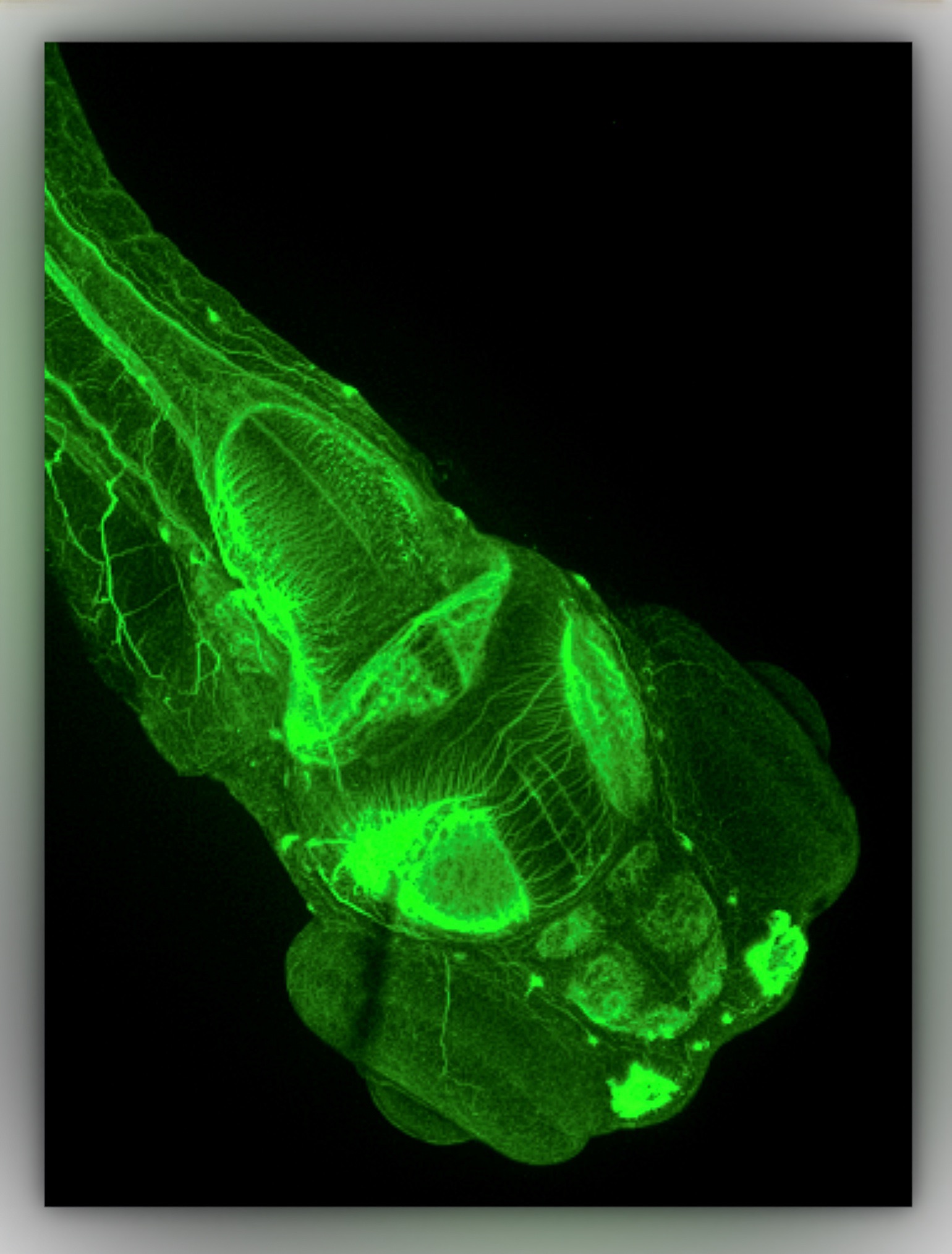
We have created a zebrafish embryo and larvae model of UPM exposure during brain development and have developed a combination of imaging and novel computation machine learning analysis tools to measure impact on the developing brain. We also have RNA seq data showing changes in expression of genes and pathways associated with a number of significant neurodevelopmental disorders.
This project will test the hypothesis that exposure to UPM during development results in abnormal brain architecture and altered gene expression in pathways that control this process. We also hypothesise that pharmacological manipulation of these pathways will result in reversal of the phenotype.
This project will involve a combination of imaging, computational analysis, molecular biology and bioinformatic skills and will be of interest to students with a developmental biology, neuroscience or broad biological sciences background.
References:
- Morris, R. H., Counsell, S. J., McGonnell, I. M., and Thornton, C (2021), Early life exposure to air pollution impacts neuronal and glial cell function leading to impaired neurodevelopment, Bioessays, 43, e2000288. doi: 10.1002/bies.202000288
- Morris RH, Chabrier G, Counsell SJ, McGonnell IM, Thornton C. Differential Effects of Urban Particulate Matter on BV2 Microglial-Like and C17.2 Neural Stem/Precursor Cells. Dev Neurosci. 2022;44(4-5):309-319. doi: 10.1159/000524829. Epub 2022 May 2. PMID: 35500557.
- Morris RH, Counsell SJ, McGonnell IM, Thornton C. Exposure to urban particulate matter (UPM) impairs mitochondrial dynamics in BV2 cells, triggering a mitochondrial biogenesis response. J Physiol. 2024 Jun;602(12):2737-2750. doi: 10.1113/JP285978. Epub 2024 May 25. PMID: 38795332.
Requirements
Essential
- Must meet our standard MRes entry requirements (no need to be a vet)
- Willingness to work with Zebrafish animal model
- Enthusiastic and motivated to work in a laboratory setting
Desirable ·
- Previous laboratory experience (including undergraduate project) is desirable but not essential. All training will be provided.
This can be taken full-time or part-time (12months FTE) project commencing in October 2026, based at RVC's Camden campus.
Funding
Fully Self-funded: The MRes student will be expected to meet some of the project costs (£2000 for laboratory consumables and zebrafish husbandry), their course fees and their living expenses.
Please note that EU/EEA and Swiss national students may no longer be eligible for the “Home” rate of tuition fees, dependent on personal circumstances (including immigration status and residence history in the UK) and UK government rules which are currently being developed. For up-to-date information on fees for EU/EEA and Swiss national students following Brexit please see our fees and funding page.
How to Apply:
Deadline: 17th May 2026
For more information on the application process and English Language requirements see How to Apply.
Interviews will take place remotely (Teams, Zoom etc) within 4 weeks of the closing date.We welcome informal enquiries - these should be directed to imcgonnell@rvc.ac.uk
| See all available MRes projects→ |