Inside canine heart surgery: New studies from the RVC refine risk and recovery in canine mitral valve repair
New clinical research from the Royal Veterinary College (RVC) has provided important novel insights into the surgery risks and recovery outcomes following mitral valve repair in dogs. The two complementary studies expand the evidence base and understanding of how dogs respond to this complex procedure and what influences their recovery. Together, the findings will help veterinary teams better manage surgical risks and set expectations for owners.
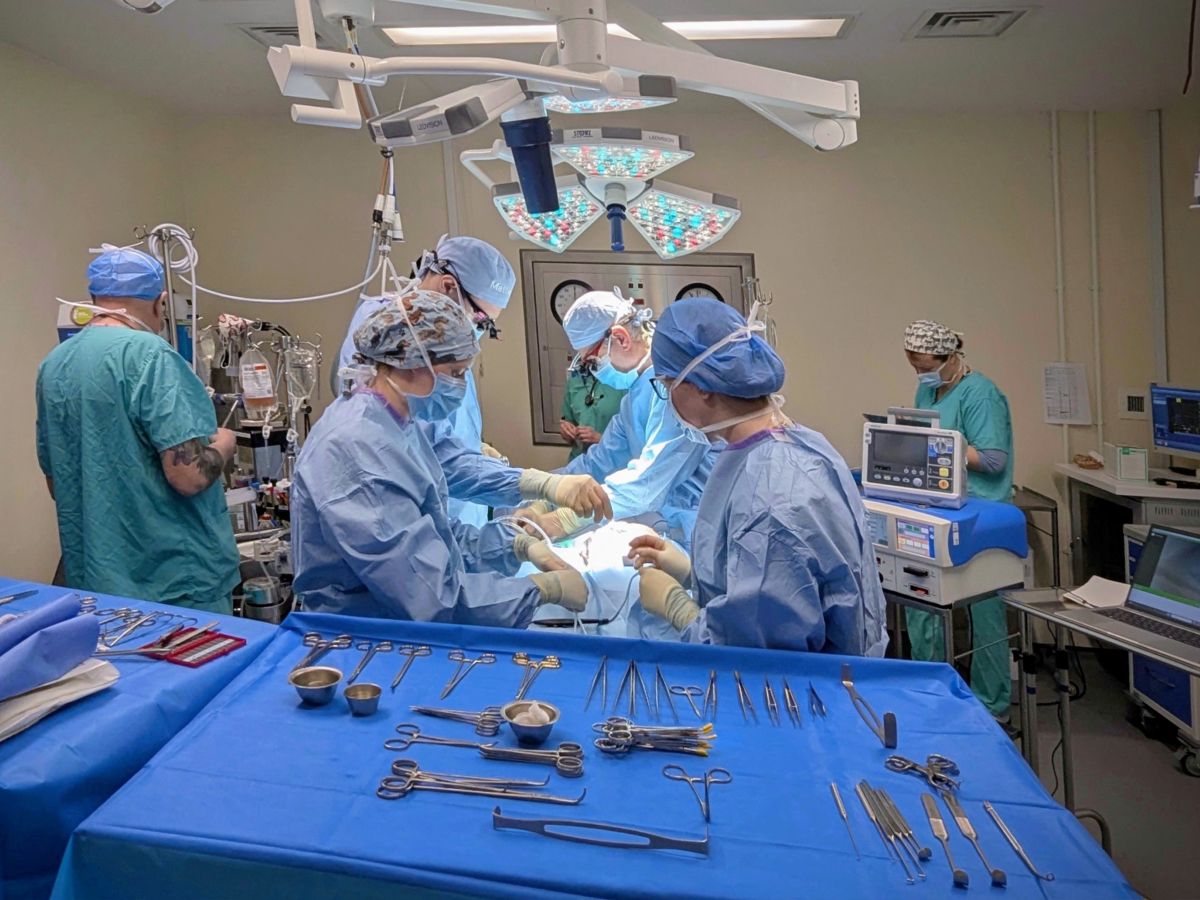
Myxomatous (degenerative) mitral valve disease is the most common heart disease in dogs, particularly affecting small and toy breeds, like Cavalier King Charles Spaniels and Miniature and Toy Poodles, although dogs of any size can be affected. The condition causes the mitral valve – a one-way valve located on the left side of the heart - to deteriorate, leading to valve incompetence (blood leaking backwards). This can result in heart enlargement and eventually heart failure. Surgical repair offers a treatment option in advanced cases, but it is complicated and requires cardiopulmonary bypass, where a machine temporarily takes over the function of the heart and lungs during surgery. To date, there has been limited research on this complex procedure.
Therefore, the clinical team at the RVC, which developed open heart surgery in the UK, set out to address this gap and analysed anonymised clinical data from dogs from the UK, Europe and the USA undergoing mitral valve repair at the Queen Mother Hospital for Animals at the RVC.
One study evaluated the anaesthetic management and outcomes of 176 dogs undergoing surgery, focusing on complications during and around the time of anaesthesia. The second study assessed 66 dogs to identify features on heart scans that could help predict whether the heart would remain enlarged after surgery.
The findings showed that while mitral valve repair can be effective, it is associated with significant intraoperative and postoperative risks, highlighting the need for careful case management. The research also demonstrated that most beneficial changes in heart size, known as reverse remodelling, occurred within the first three months after surgery.
Additional findings included:
- Longer cardiopulmonary bypass duration was associated with increased risk, suggesting time on bypass should be minimised where possible.
- Close perioperative monitoring and rapid-response protocols are essential to manage anticipated complications.
- Dogs with greater pre-surgical heart enlargement and higher body weight were more likely to have persistent left heart enlargement after surgery.
- Recovery outcomes vary, meaning individual patient factors must be considered when advising owners.
These findings provide valuable evidence for veterinary teams performing or developing mitral valve repair programmes, offering clearer guidance on managing surgical risk and predicting recovery. The research will also support more informed discussions with dog owners about the potential risks and expected outcomes of this advanced procedure.
Professor Dan Brockman, Professor in Small Animal Surgery and Director of the Cardiothoracic Surgery Service at the RVC, said:
“Establishing and maintaining open heart surgical capability at the RVC has been both the most challenging and the most rewarding activity of my 36 years as a specialist small animal surgeon. Our team are rightly proud of what we have achieved, but we all know that the route to even greater consistency of results lies in the constant process of reflection, refinement and improvement in every aspect of what we do.”
Dr Carolina Palacios Jimenez, Senior Lecturer in Veterinary Anaesthesia and Analgesia at the RVC, said:
“The anaesthesia of these patients is one of the most challenging we manage. We are proud to share our experience and findings so other centres that are starting Cardiothoracic programmes can benefit from it.”
The RVC is currently the only centre in the UK offering this specialist surgical procedure. To find out more, please visit https://www.rvc.ac.uk/small-animal-vet/specialist-referrals/advanced-techniques/cardiothoracic-surgery/mitral-valve-disease.
Notes to Editors
References
Palacios Jimenez C, Stathopoulou T, Redondo García JI, Rossanese M, Brockman D, Albhai H. Anaesthetic management and peri-anaesthetic morbidity and mortality in a population of 176 dogs undergoing mitral valve repair under cardiopulmonary bypass. Frontiers in Veterinary Science.;13:1800234.
Atkinson BK, Rossanese M, Brockman DJ, Luis Fuentes V. Echocardiographic predictors of persistent left heart enlargement in dogs undergoing surgical mitral valve repair. J Vet Cardiol. 2026 Jan 16:S1760-2734(26)00003-2. doi: 10.1016/j.jvc.2026.01.002.
For media enquiries, please contact:
- rvc@plmr.co.uk
- Press Line: 0800 368 9520
About the RVC
- The Royal Veterinary College (RVC) is the UK's largest and longest established independent veterinary school and is a Member Institution of the University of London.
- It is one of the few veterinary schools in the world that hold accreditations from the RCVS in the UK (with associated recognition from the AVBC for Australasia, the VCI for Ireland and the SAVC for South Africa), the EAEVE in the EU, and AVMA in the USA and Canada.
- The RVC is ranked as the top veterinary school in the world in the QS World University Rankings by subject, 2026.
- The RVC offers undergraduate and postgraduate programmes in veterinary medicine, veterinary nursing and biological sciences.
- The RVC is a research-led institution, with 88% of its research rated as internationally excellent or world class in the Research Excellence Framework 2021.
- The RVC provides animal owners and the veterinary profession with access to expert veterinary care and advice through its teaching hospitals and first opinion practices in London and Hertfordshire.
- http://www.rvc.ac.uk.
